Publications
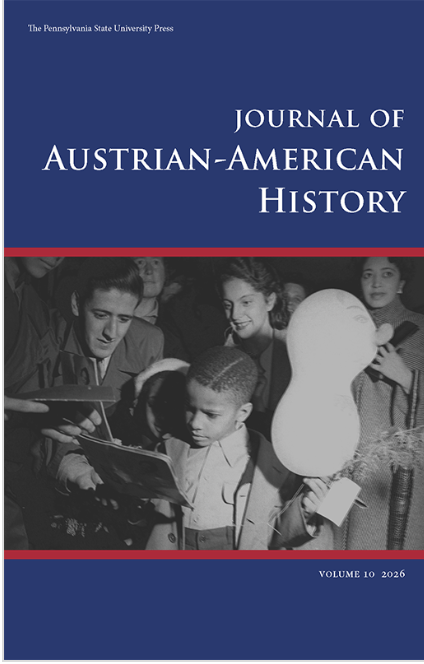

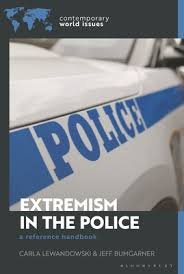
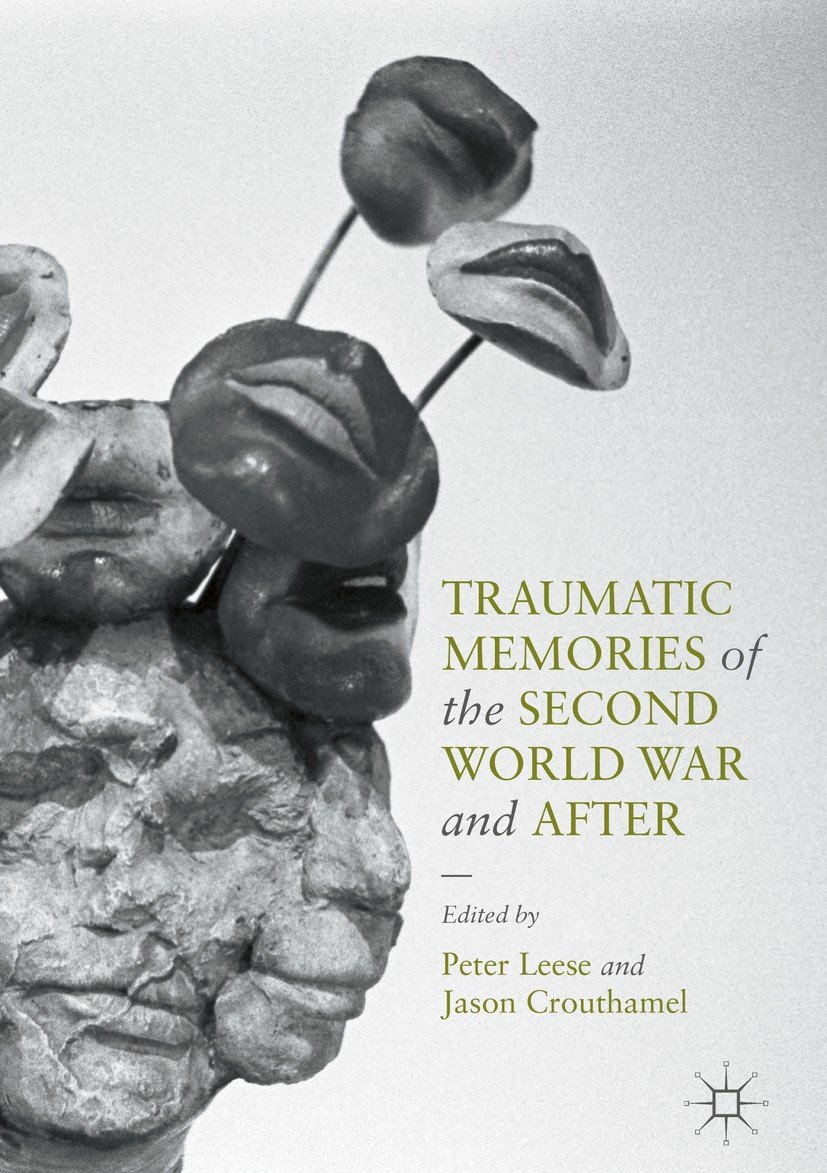


Ever since the western advent of modern policing in the mid-1800s, government and civilian agencies alike have attempted to reform security services and to deradicalize police officers with the hope to produce fair and impartial civil servants and hence build public trust. This essay surveys international efforts to combat extremism in law enforcement in recent history. The intention is to situate the problem in its proper global and historical context and to highlight strategies that might be adapted for effective usage in the United States today.
CHAPTER
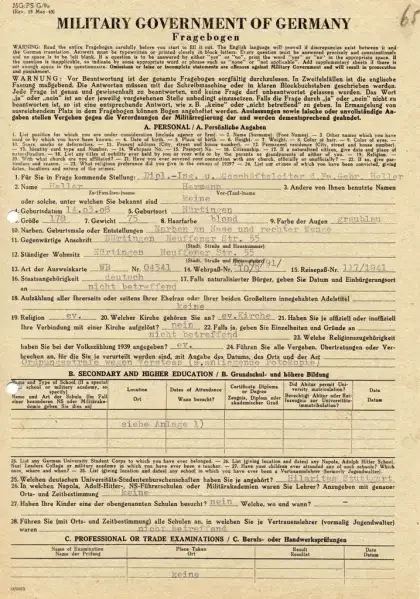
This article critically reexamines denazification narratives, arguing that the ubiquitous use of questionnaires to determine culpability unintentionally, if predictably, created a giant mechanism for renarrating individual lives in ways that emphasized one’s innocence. It illuminates the workings of innocence as a strategy of remembrance.
ARTICLE
CHAPTER
This comparative study challenges longstanding assumptions about the nature of French military government by accessing newly declassified archival materials. It shows that French denazification programs were decentralized and malleable, and also that the screening bureaucracy was striking similar to those of the other Allied nations.
This chapter considers the psychological and social consequences of denazification, particularly as they relate to community relations, emotional wellbeing, memory, and identity. It shows how war trauma was manipulated for social and political ends and how deceit and denunciation, seemingly sanctioned by the state bureaucracy, made it exceedingly difficult to reframe individual life stories and to reconnect communal bonds.
CHAPTER
ARTICLE
This forum article addresses the fraught relationship between technology and representations of the Holocaust by examining the ethical dilemmas and opportunistic possibilities of a developing virtual reality tool for teaching and learning. Its focus is a pilot project at Rowan University, which seeks to balance the immersive nature of virtual and augmented realities with best practices, robust student engagement, and historical accuracy.
ARTICLE
CHAPTER
CHAPTER
“Crimes Committed by Soviet Soldiers against German Civilians, 1944-1945: A Historiographical Analysis.” Journal of Military and Strategic Studies 10:4 (Summer 2008): 1-33.
ARTICLE
BLOG
OP-ED
BLOG
OP-ED
INTERVIEW
This article reexamines western Allied planning for the denazification of Austria, arguing that the campaign’s limitations were not merely the result of Cold War geopolitics or the “victim’s doctrine.” Instead, the lenient, pragmatic, and decentralized nature of the denazification program was largely an unintended consequence of systemic failures by American and British planners. Paradoxically, the very institutional weaknesses that hindered a thorough purge may have helped to enable the postwar stabilization and democratization of Austria, suggesting that its successful transition was less a product of methodical design and more a result of improvisation under constrained and uncertain conditions.
“Immediate Postwar Europe.” In Oxford Bibliographies in Modern European History. Ed. Monica Black. New York: Oxford University Press (under review).
ARTICLE
Victor Gay, Jan Stuckatz, Selina Hofstetter, and Mikkel Dack. “Who Became a Nazi? A Structured Database of the German Denazification Questionnaires from the US Occupation Zone in Germany, 1945–1949,” Toulouse School of Economics; Institute for Advanced Study in Toulouse (under review).
CHAPTER

ARTICLE
INTERVIEW